
Introduction
Baking recipes beginners represent foundational formulas designed to build confidence in the domestic kitchen through exact measurement, dependable ingredient ratios, and accessible techniques. According to the Culinary Institute of America (CIA), mastering basic yeast doughs and quick breads requires strict adherence to ingredient weights and proper oven calibration rather than advanced culinary intuition. Establishing reliable preparation routines transforms basic baking into a stress-free cottage craft, allowing home cooks to produce wholesome daily bread and comforting pastries with consistent success. Enthusiasts looking to expand culinary skills can explore more inspiration via Recipes & Baking for time-tested kitchen methods.
Cottage Project & Prep Snapshot:
- Core Focus: Foundational ingredient ratios and thermal control for novice bakers.
- Materials & Scope: Digital scale, standard loaf pans, unbleached flour, and active dry yeast.
- Key Recommendation: Always weigh dry ingredients by grams instead of volume cups to guarantee predictable chemical reactions.
Core Principles and Detailed Overview
Baking recipes beginners rely heavily on accurate chemical leavening, precise oven temperatures, and proper hydration levels to achieve uniform crumb structure and golden crusts. Understanding how flour, fat, sugar, and liquids interact dictates whether a loaf rises tall or remains dense and flat. Novice bakers achieve optimal results by organizing all components, known as *mise en place*, before turning on heating appliances. Additional creative inspirations for home organization and design elements can be found through DIY & Cottage Decor for a cohesive homestead aesthetic.
Key Specifications and Breakdown
| Component / Step | Recommended Specification | Quality & Practical Tip |
|---|---|---|
| Flour Measurement | 120 grams per cup (Weighed) | Fluff flour with a fork before spooning into the vessel to prevent dense compaction. |
| Oven Temperature | 350°F to 425°F (Preheated) | Verify actual internal thermal conditions using an independent oven thermometer. |
| Yeast Activation | 105°F to 110°F liquid temp | Exceeding 120°F kills live cultures, preventing the necessary carbon dioxide production. |
Precise volumetric scaling and accurate thermal control remain the two primary factors dictating successful crumb structure and crust development in domestic baking. — Culinary Institute of America (CIA). Related guide: Recipes Baking Easy.
Recipe Step Photos & Variations




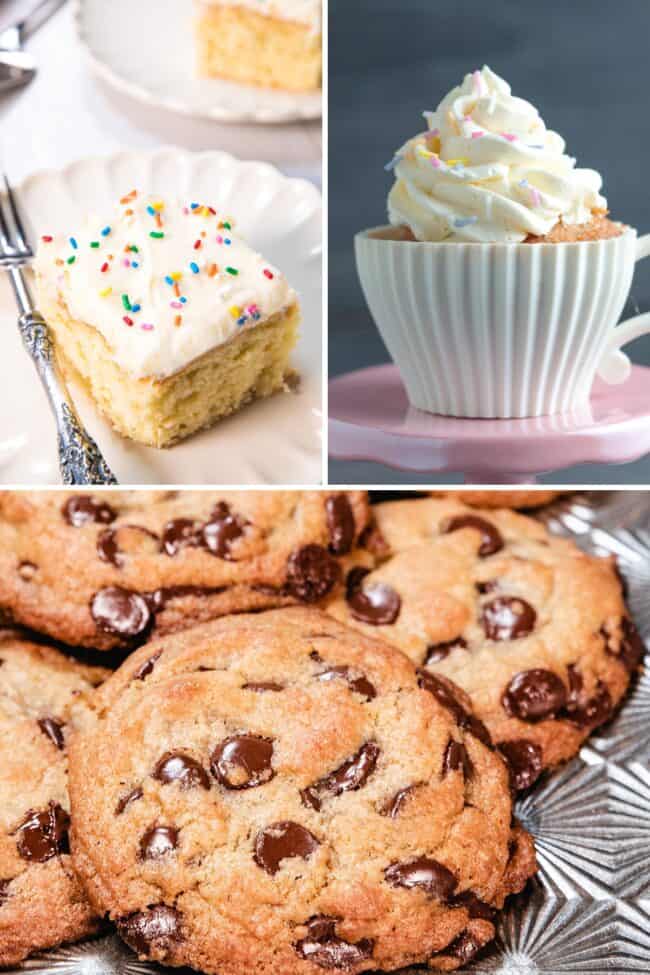

Step-by-Step Practical Application and Guidelines
Executing baking recipes beginners successfully begins with reading the entire formulation twice


